When you hire a contractor in Colorado for a construction or remodeling project, you expect the work to be completed to a professional standard. Unfortunately, disputes can arise when the quality of work falls short of expectations. As a property owner, you may wonder whether you can refuse payment to a contractor for subpar work. The answer is not always straightforward and depends on several factors, including the terms of your contract, the extent of the deficiencies, and Colorado law.
This blog explores your rights and obligations as a property owner in Colorado when dealing with a contractor who delivers poor-quality work.
Understanding Your Construction Contract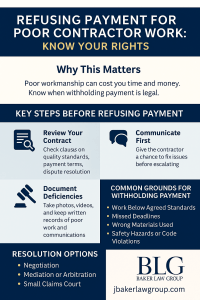
A construction contract is a legally binding agreement between you and the contractor. It outlines the scope of work, deadlines, payment schedules, and quality standards for the project. This contract is the foundation for determining whether the contractor has fulfilled their obligations.
Key elements in your construction contract that may impact your right to withhold payment include:
- Quality Standards: Many contracts specify that the work must be completed in a “workmanlike manner” or meet industry standards.
- Payment Terms: Most contracts include a payment schedule for project milestones or completion.
- Remedies for Breach: The contract may outline specific remedies, such as requiring the contractor to correct deficiencies or providing the right to terminate the agreement for substandard work.
Before refusing payment, review your contract thoroughly to understand your rights and whether the contractor has violated the terms.
The Role of Colorado’s Mechanics Lien Law
Under Colorado law, contractors can file a mechanics lien if they believe they have not been paid for services rendered. A mechanics lien gives the contractor a legal claim against your property until the payment dispute is resolved. A contractor can file a lien even if you believe their work is subpar.
To protect yourself, consider these steps:
- Document the Issues: Take photographs, videos, and detailed notes about the deficiencies in the contractor’s work.
- Request Repairs: Provide the contractor with an opportunity to address and correct the problems.
- Consult an Attorney: If the contractor threatens to file a mechanics lien or you plan to withhold payment, consult a construction lawyer to understand your legal rights and options.
Colorado law requires contractors to meet notice and filing requirements for mechanics liens. Failure to comply with these rules may invalidate the lien, which could work in your favor during a payment dispute.
When Is Refusing Payment Justified?
Refusing payment to a contractor is justified only under certain circumstances. For example, if the contractor has breached the terms of the contract by failing to deliver the agreed-upon quality of work, you may have a valid reason to withhold payment.
However, you must act carefully to avoid being accused of breaching the contract yourself. Common scenarios where withholding payment may be justified include:
- Work Not Completed: The contractor has abandoned the project or failed to complete the agreed-upon scope of work.
- Defective Work: The work completed is of such poor quality that it does not meet industry standards or the contract terms.
- Failure to Correct Issues: The contractor has been notified of deficiencies but refuses to address or repair them.
In these cases, withholding payment can serve as leverage to encourage the contractor to fulfill their obligations. Be sure to notify the contractor in writing of the reasons for withholding payment and keep detailed records of all communications.
Alternatives to Withholding Payment
Sometimes, withholding payment may escalate the dispute and lead to additional legal complications. Before taking this step, consider alternative remedies, such as:
- Mediation or Arbitration: Many construction contracts include dispute resolution clauses requiring mediation or arbitration before pursuing legal action. These methods can provide a faster and less expensive resolution than litigation.
- Hire a Third-Party Inspector: An independent inspection can help assess the quality of the work and provide evidence for your claim.
- Partial Payment: If the contractor has completed some work satisfactorily, offering partial payment can demonstrate your willingness to resolve the dispute in good faith.
Working collaboratively with the contractor to resolve issues may avoid the need for legal action and preserve a positive working relationship.
Legal Recourse for Property Owners
If negotiations with the contractor fail, you may need legal action. Colorado law provides several remedies for property owners dealing with poor-quality work, including:
- Breach of Contract Claims: If the contractor has violated the terms of your agreement, you can file a lawsuit for damages.
- Claims for Negligence: You may have a negligence claim if the contractor’s work caused property damage or posed safety hazards.
- Unfair Trade Practices: Under the Colorado Consumer Protection Act (CCPA), property owners may sue contractors for deceptive or fraudulent practices.
You may also be entitled to recover attorney’s fees and costs if you prevail in court. A Denver construction lawyer can help you determine the best action and guide you through the legal process.
Preventing Contractor Disputes
Taking proactive steps before and during the project can help prevent disputes over payment and quality of work:
- Choose Reputable Contractors: Research contractors thoroughly, check references, and verify licensing and insurance.
- Use a Detailed Contract: A well-drafted contract clearly defining the scope of work, quality standards, and dispute resolution procedures is essential.
- Monitor Progress: Regularly inspect the work and address issues as they arise.
These steps can help ensure your project stays on track and reduce the likelihood of payment disputes.
Contact a Denver Construction Lawyer
Navigating a payment dispute with a contractor can be stressful and legally complex. If you believe a contractor has delivered poor-quality work or failed to meet their contractual obligations, Baker Law Group can help. Our experienced construction lawyers deeply understand Colorado construction law and can guide you through protecting your rights.
Contact Baker Law Group today to schedule a consultation with a Denver construction lawyer. Let us help you find the best resolution to your construction dispute and ensure your interests are fully protected.