
What is the Difference Between a DUI and a DWAI in Colorado
Driving under the influence is a serious offense in Colorado, but not all cases are treated the same. Some drivers face charges for DUI, while others are charged with DWAI. Knowing the difference between DWAI vs. DUI in Colorado can make a major difference in how you respond, what penalties you face, and what your options are.
At Baker Law Group, PLLC, we represent clients across Colorado who are charged with DWAI or DUI. Our attorneys help you understand what each charge means, how they’re proven, and what can be done to protect your record and your future.
What Is a DWAI in Colorado
A DWAI, or Driving While Ability Impaired, is one of Colorado’s two primary impaired driving charges. It applies when a person operates a vehicle after consuming alcohol or drugs to the point that their ability to drive is even slightly affected.
Under Colorado law, a DWAI can be charged when your blood alcohol concentration (BAC) is 0.05% to 0.079%. This means that even if you are below the legal limit of 0.08%, prosecutors may still pursue a DWAI if they believe your driving was impaired.
Common consequences of a first DWAI conviction include:
 Up to 180 days in jail
- Fines up to $500
- Eight points on your driving record
- Mandatory alcohol education classes
- Community service
 Up to 180 days in jail
Although a DWAI is considered less severe than a DUI, it still counts as an alcohol-related offense. This means that if you’re ever charged again, the penalties for a second offense will be harsher.
At Baker Law Group, our attorneys often see clients who assumed they were safe to drive but later discovered that even minor signs of impairment can lead to a DWAI charge.
What Is a DUI in Colorado
A DUI, or Driving Under the Influence, is a more serious offense than a DWAI. In Colorado, a DUI is charged when a driver’s ability to operate a vehicle is substantially impaired by alcohol, drugs, or a combination of both.
A BAC of 0.08% or higher typically leads to a DUI charge. However, law enforcement can still charge a DUI even if your BAC is lower if evidence shows you were clearly unable to drive safely.
A first-time DUI conviction in Colorado can include:
- Up to one year in jail
- Fines up to $1,000
- License revocation for nine months
- Twelve points on your driving record
- Mandatory alcohol education and therapy
- Possible installation of an ignition interlock device
The long-term effects of a DUI go beyond court penalties. It can raise your insurance rates, limit job opportunities, and remain on your record permanently. Colorado law does not allow DUI convictions to be sealed or expunged.
Baker Law Group helps clients challenge DUI evidence, from the legality of the traffic stop to the accuracy of the breath or blood test. Our goal is to minimize the impact of a DUI on your life and your future.
DWAI vs. DUI in Colorado: The Key Differences
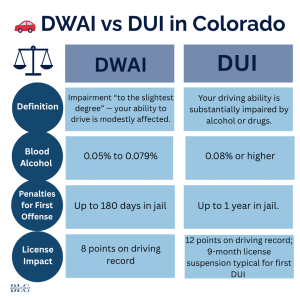
While both offenses fall under Colorado’s impaired driving laws, the distinction between DWAI vs. DUI lies in the degree of impairment and the severity of penalties.
Here are the main differences between DWAI and DUI in Colorado:
- Level of impairment: DWAI means your ability to drive was slightly affected, while DUI means you were substantially impaired.
- BAC threshold: DWAI starts at 0.05%, while DUI begins at 0.08% or higher.
- Driver’s license impact: A DWAI may not trigger an automatic suspension for a first offense, but a DUI typically does.
- Points on record: A DWAI adds 8 points; a DUI adds 12.
- Potential jail time: DWAI can result in up to 180 days in jail, while DUI carries up to a year.
Although DWAI penalties are lighter, the conviction still becomes part of your criminal record. Employers, background checks, and insurance companies can all see it. Multiple alcohol-related convictions—DWAI or DUI—can quickly escalate to more severe consequences, including mandatory jail time and license revocation.
How Law Enforcement Proves DWAI vs. DUI
In both cases, police rely on similar evidence, including traffic behavior, field sobriety tests, and chemical tests. The difference comes down to the level of impairment they can demonstrate.
DWAI evidence often includes:
- Erratic but not extreme driving behavior
- Slight slurring or delayed reactions
- BAC readings between 0.05% and 0.079%
DUI evidence may include:
- Noticeable lack of motor control or judgment
- High BAC results (0.08% or above)
- Clear physical or verbal signs of intoxication
Because field tests and BAC results can be challenged, working with a knowledgeable attorney can significantly affect the outcome of your case.
The Lasting Consequences of a Conviction
Both DWAI and DUI convictions stay on your criminal record permanently in Colorado. They cannot be sealed, even if years have passed. A first offense may seem minor, but future charges can carry severe penalties, including mandatory jail time, longer license suspensions, and steep fines.
Convictions can also affect professional licenses, background checks, and insurance premiums. That’s why it’s crucial to act quickly after an arrest and understand every legal option available to you.
How Baker Law Group, PLLC Can Help
Baker Law Group, PLLC, represents individuals across Colorado facing DWAI vs. DUI charges. Our defense strategy focuses on protecting your rights, your license, and your future. We examine every part of your case to identify weaknesses in the prosecution’s evidence, including how traffic stops and tests were conducted.
Our attorneys are known for:
- Skilled negotiation and trial experience
- Responsive communication with clients
- Strategic defense built on real-world results
- A firm commitment to minimizing long-term damage
Every case is different, and timing is critical. Acting quickly gives your attorney more options to challenge your charges or negotiate for reduced penalties.
Call Baker Law Group Today
If you’ve been charged with DWAI or DUI in Colorado, don’t wait to get help. The difference between DWAI vs. DUI may seem small, but the outcome can shape your future. Baker Law Group, PLLC, has the experience and strategy to guide you through this process with confidence and clarity.
Call our Colorado office today to schedule a confidential consultation and learn how our legal team can help protect your license, record, and reputation.