Probate can feel overwhelming, especially when grieving the loss of a loved one. Understanding the probate process and knowing what to expect can ease some of this stress. Texas probate law outlines specific steps and timelines that govern the speed at which an estate can proceed through the court. While every situation is unique, the average probate length in Texas is six months to a year.
At Baker Law Group, PLLC, we understand that probate issues involve more than legal paperwork—they affect families during difficult times. Our team combines extensive experience in Texas probate law with responsive support to help you understand each step clearly and complete the process efficiently.
Average Probate Length in Texas
Generally, the probate process in Texas typically lasts between six months and a year. However, certain estates can move more quickly, while others may take considerably longer. Understanding the factors that affect your situation helps you set realistic expectations.
Simple Estates: Faster Probate
Simple estates—those with straightforward, uncontested wills and minimal debts—typically complete the probate process within six months. Texas probate law allows for simpler methods, such as independent administration, which usually require less court involvement.
Complex Estates: Lengthier Probate
Complex estates, involving contested wills, substantial debts, or extensive property, often require nine months or more to finalize. Texas probate law requires court oversight for contested estates or complex financial matters, which can extend the timeline.
What is Probate Under Texas Probate Law?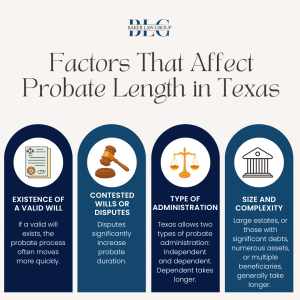
Probate is the legal process that validates a deceased person’s will and distributes their assets to beneficiaries. If no will exists, probate determines how property will pass according to Texas probate law. Probate also settles any outstanding debts or taxes the deceased person owed.
Understanding probate can feel complicated, but Texas probate law is structured to handle estate matters fairly and clearly. Most probate matters follow a predictable path, although exact timelines may vary depending on individual circumstances.
Factors That Affect Probate Length in Texas
Several key factors influence the length of probate in Texas, including estate complexity, disputes, the existence of a valid will, and the speed of action by executors or administrators.
Existence of a Valid Will
If a valid will exists, the probate process often moves more quickly. Probate law in Texas streamlines procedures for estates with clear instructions. However, estates without wills—known as intestate estates—require additional time to identify beneficiaries and distribute property by Texas probate law guidelines.
Contested Wills or Disputes
Disputes significantly increase probate duration. When beneficiaries contest the validity of a will or disagree on the distribution of property, Texas probate law requires court intervention. Resolving disputes can extend probate timelines from several months to multiple years.
Type of Administration
Texas allows two types of probate administration: independent and dependent. Independent administration moves faster because it involves less court oversight. Dependent administration requires detailed court supervision, which can prolong the probate process.
Size and Complexity of the Estate
Large estates, or those with significant debts, numerous assets, or multiple beneficiaries, generally take longer. Handling complex asset valuations or creditor claims under Texas probate law can prolong the probate process.
Probate Timeline Under Texas Probate Law
A basic understanding of probate timelines helps ease anxiety by providing clear expectations. Here’s an overview of typical probate stages and timelines under Texas probate law.
Filing and Probate Initiation (1-2 Months)
The probate process begins when someone applies to the appropriate probate court in Texas. Courts typically schedule a hearing within 30 to 45 days. At this hearing, a judge determines the validity of the will and appoints an executor or administrator.
Inventory and Notification (1-3 Months)
After the appointment, executors or administrators must notify creditors and beneficiaries. They must also inventory and appraise the estate’s assets. Under Texas probate law, executors typically have 90 days to file the inventory with the court.
Debt Settlement (3-6 Months)
Creditors have specific deadlines to file claims against the estate, typically within four months of notification. Executors then verify and pay valid debts. This process can vary significantly, especially if disputes arise over the legitimacy of creditor claims.
Asset Distribution (1-4 Months)
Once debts and taxes are settled, remaining assets are distributed according to the will or Texas probate law. Beneficiaries typically receive property after all legal obligations are satisfied. Estates with straightforward distributions typically conclude within a few months.
Finalizing Probate (1 Month)
After distribution, executors or administrators must file a final accounting with the probate court. Texas probate law then allows the court to close the estate, officially concluding the probate process.
Strategies for Shortening Probate Under Texas Probate Law
While the duration of probate often depends on factors beyond your control, specific strategies can help speed up the process.
Choose Independent Administration
Independent administration significantly reduces the time required for probate by minimizing court involvement. If the will authorizes it—or if all beneficiaries agree—independent administration typically expedites the probate process under Texas probate law.
Clear Communication Among Beneficiaries
Open, proactive communication among heirs can reduce misunderstandings and disputes. Transparent conversations help ensure everyone agrees on estate matters, reducing the risk of probate delays.
Prompt Action by the Executor
Executors who promptly fulfill their responsibilities can expedite the probate process. Quick asset inventory, timely notifications, and proactive handling of creditor claims contribute to a more efficient probate process under Texas probate law.
Common Misconceptions About Probate Length in Texas
Misconceptions about the duration of probate often add unnecessary stress. Here are some common myths:
Probate Always Takes Years
Most Texas probates finish within one year. Although specific complex or contested cases can last longer, the idea that probate always takes years is inaccurate. Understanding Texas probate law clarifies realistic timelines.
All Estates Require Extensive Court Involvement
Independent administration under Texas probate law significantly reduces court oversight. Not all estates demand extensive legal intervention. Many estates settle smoothly, with minimal court involvement.
Probate Length Depends Solely on Estate Size
Estate size matters, but it’s not the only factor. A small, contentious estate can take longer than a larger, harmonious one. Probate law in Texas considers factors such as disputes and debt resolution to be equally important.
Why Working With Baker Law Group, PLLC Makes a Difference
Probate can be challenging, but having experienced, responsive legal support simplifies the process significantly. Baker Law Group, PLLC, brings clarity, strategic counsel, and compassionate support to probate cases. Our attorneys are thoroughly familiar with Texas probate law, ensuring the efficient handling of estates, from straightforward to complex cases.
Our approach combines proactive communication, meticulous document preparation, and swift response times. These distinctions often shorten probate timelines, helping families achieve closure sooner. Whether dealing with simple estates or navigating complex disputes, Baker Law Group, PLLC, provides practical guidance at every step.
Take the Next Step with Baker Law Group, PLLC
Understanding how lengthy probate takes in Texas prepares you for what’s ahead, but professional guidance ensures you complete probate effectively and without unnecessary delays. Baker Law Group, PLLC, is here to support you through every stage, offering clarity, responsiveness, and proven legal strategies.
If you’re facing probate concerns in Texas, let our experienced probate law attorneys guide you confidently through the process. Schedule your consultation today, and take the first step toward a smoother, more efficient probate journey.