
How to Dissolve a Business in Colorado: A Comprehensive Guide
Dissolving a business in Colorado involves a series of legal steps that must be carefully followed to ensure compliance with state laws and regulations. Whether you’re closing your business voluntarily or due to other circumstances, understanding the dissolution process is crucial. This guide will walk you through the necessary steps, providing you with clear instructions on how to properly dissolve your business in Colorado.
Understanding Business Dissolution in Colorado
Business dissolution is the legal termination of a business entity’s existence. In Colorado, this process is governed by state laws that vary depending on the type of business entity you are dissolving, such as a corporation, limited liability company (LLC), or partnership.
Steps to Dissolve a Business in Colorado
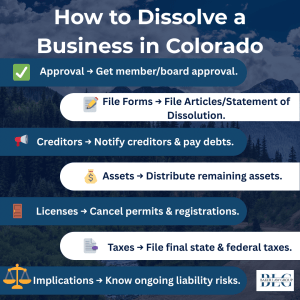
1. Hold a Meeting and Obtain Approval
The first step in dissolving a business is to obtain the necessary approvals from the business owners or shareholders. This typically involves holding a meeting to vote on the dissolution. For corporations, this means a vote by the board of directors and shareholders. For LLCs, the members must approve the dissolution. The approval process and required majority will be outlined in your business’s governing documents, such as the bylaws for a corporation or the operating agreement for an LLC.
2. File Articles of Dissolution
 Once you have obtained the necessary approvals, you must file the appropriate dissolution documents with the Colorado Secretary of State. The specific document you need to file depends on your business entity type:
- Corporations: File the “Articles of Dissolution.”
- LLCs: File the “Statement of Dissolution.”
- Partnerships: File the “Statement of Dissolution” if applicable.
These documents can be filed online through the Colorado Secretary of State’s website. There is a filing fee associated with this process, which varies depending on the type of business entity.
3. Notify Creditors and Settle Debts
After filing the dissolution documents, you are required to notify your creditors and settle any outstanding debts. This involves:
- Notifying Creditors: Inform all known creditors of your business’s dissolution. This notification should be in writing and include information on how they can submit claims against your business.
- Settling Debts: Pay off any outstanding debts and obligations. This may involve negotiating settlements or payment plans with creditors.
4. Wind Up Business Affairs
Winding up business affairs involves finalizing all business operations and distributing any remaining assets. Key steps in this process include:
- Closing Business Accounts: Close your business bank accounts, and credit accounts, and cancel any licenses or permits associated with your business.
- Distributing Assets: Distribute any remaining assets to the business owners or shareholders according to the terms outlined in your governing documents.
- Final Tax Filings: File your final business tax returns with the Internal Revenue Service (IRS) and the Colorado Department of Revenue. Ensure all payroll taxes, sales taxes, and other state taxes are paid.
5. Compliance with Employment Laws
If your business has employees, you must comply with state and federal employment laws when dissolving your business. This includes:
- Providing Final Paychecks: Ensure all employees receive their final paychecks, including any accrued vacation or severance pay.
- Notifying Employees: Inform your employees of the business’s closure and provide information on unemployment benefits and other resources.
6. Cancel Business Licenses and Permits
To fully dissolve your business, you must cancel any business licenses and permits associated with your operations. This includes:
- State Licenses: Cancel any state-issued business licenses through the Colorado Department of Regulatory Agencies.
- Local Permits: Cancel any local permits through your city or county government offices.
7. Retain Business Records
Even after dissolving your business, it is essential to retain your business records for a specified period. In Colorado, it is recommended to keep your business records for at least three to seven years. These records include financial statements, tax returns, and documentation of the dissolution process.
Common Pitfalls in Business Dissolution
Dissolving a business can be complex, and there are common pitfalls to avoid:
- Failing to Obtain Proper Approvals: Ensure all required approvals are obtained and documented to avoid legal issues.
- Not Notifying Creditors: Properly notify creditors to prevent future claims against your dissolved business.
- Incomplete Tax Filings: File all necessary tax returns and pay outstanding taxes to avoid penalties.
Contact Baker Law Group, PLLC Today
Navigating the business dissolution process can be challenging, and having experienced legal guidance can make a significant difference. At Baker Law Group, PLLC, our knowledgeable business lawyers are here to assist you with every step of dissolving your business. We understand the intricacies of Colorado’s business laws and are committed to providing personalized legal support to ensure a smooth and compliant dissolution process. Whether you need a Denver business lawyer, a Colorado Springs business lawyer, or a Fort Collins business lawyer, our team is ready to guide you through every step.
If you are considering dissolving your business in Colorado, contact Baker Law Group, PLLC today. Call us at (702) 819-8901 or visit our website to schedule a consultation.