
Living Will vs Advance Directive
A living will is one type of advance directive. In simple terms, an advance directive is a broad category of legal documents that let you state your healthcare wishes in case you can’t speak for yourself. A living will specifically outlines the kind of medical care you do or do not want, usually at the end of life.
Understanding the difference between advance directive and living will is important if you want to stay in control of your health decisions, even in an emergency.
What Is an Advance Directive
An advance directive is a legal document that provides instructions about your future medical care. It’s used if you become unconscious, seriously ill, or unable to communicate.
Advance directives can include one or more of the following:
- Living will
- Medical power of attorney
- CPR directive
- Organ and tissue donation instructions
These forms help doctors and loved ones understand your wishes when you can’t speak for yourself. In Colorado, anyone 18 or older can complete advance directives.
What Is a Living Will
A living will is a specific type of advance directive. It outlines what kind of life-sustaining treatment you want—or don’t want—if you are in a terminal condition or a permanent coma.
It might include your decisions about:
- Feeding tubes
- Breathing machines (ventilators)
- Resuscitation (CPR)
- Dialysis
- Use of pain medications
A living will takes effect only when two doctors agree that you are in a qualifying medical condition and cannot speak for yourself. Until that point, doctors will continue to ask you directly or turn to your chosen medical decision-maker.
Advance Directive vs Living Will: What’s the Difference
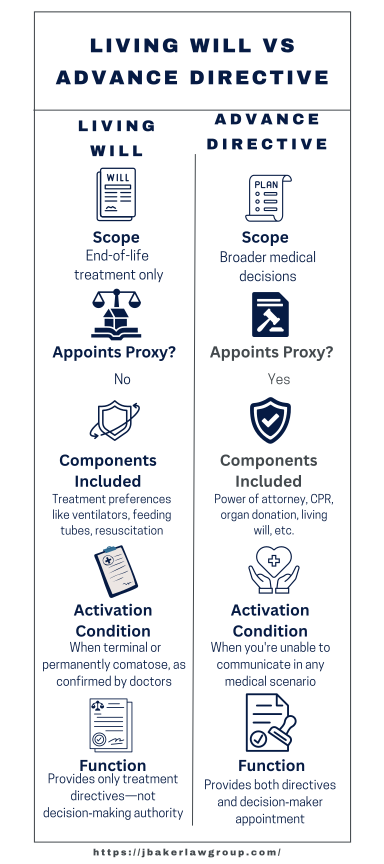 This is where many people get confused. The term advance directive is the umbrella. A living will fits under that umbrella as one specific kind.
Think of it like this:
- An advance directive is any legal document that gives instructions about your medical care.
- A living will is one type of advance directive, focused on end-of-life treatment.
A complete advance directive setup might include a living will and a medical durable power of attorney. These documents work together to give full guidance—one explains your preferences, the other names someone to make choices on your behalf.
What Happens If You Don’t Have One
If you don’t have any type of advance directive and you become unable to speak, decisions about your care could fall to a hospital committee or next-of-kin. This can lead to delays, disagreements, or decisions that go against your personal values.
Without a living will, doctors may provide every possible life-sustaining treatment, even if it prolongs suffering. Without a medical power of attorney, your family could face confusion about who is allowed to make decisions.
Advance directives remove that uncertainty.
Are Advance Directives Legally Enforced in Colorado
Yes. Colorado law recognizes both living wills and other advance directives as legally binding when properly completed and signed. They don’t need to be notarized, but they must meet the state’s signature and witness requirements.
It’s a good idea to give copies to your doctor, hospital, and family members. You can also register your documents with the Colorado Advance Directives Consortium to ensure they are accessible in an emergency.
How to Create an Advance Directive
Creating a living will or advance directive in Colorado does not have to be complicated. Some people use standard forms provided by hospitals. Others work with an attorney to customize documents that match their values and medical history.
A good estate plan often includes:
- A living will
- A medical power of attorney
- A financial power of attorney
- A general advance directive form
Together, these give you a full safety net for both health and financial decisions in case of incapacity.
Why It Matters
The difference between advance directive and living will may seem small, but it has big consequences.
Advance directives give you peace of mind and protect your loved ones from having to make painful guesses. They ensure your care aligns with your values. In a medical emergency, having these documents in place can guide doctors and avoid unwanted treatment.
If you only complete a living will, your medical preferences are clear—but you haven’t named someone to make other choices. If you only name a medical power of attorney, that person will make decisions—but they may not know what you actually want.
That’s why having both is usually best.
Talk to Baker Law Group, PLLC, Today!
If you’re ready to take the next step in planning for the future, Baker Law Group, PLLC can help. Our team has years of experience guiding Colorado residents through healthcare planning, including living wills and other advance directives.
We provide straightforward advice, fast turnaround times, and support tailored to your personal needs. Whether you’re updating old documents or starting from scratch, you’ll get a clear plan that helps you stay in control—no matter what happens. Contact us today for a confidential consultation.