Assault charges can range from minor altercations to serious offenses that lead to significant legal consequences. Understanding the difference between misdemeanor and felony assault is essential for anyone facing these charges in Denver. The classification of assault depends on various factors, including the severity of the incident, the level of harm inflicted, and the circumstances surrounding the case.
Drawing on experience handling Colorado criminal cases, Baker Law Group, PLLC outlines the key differences between misdemeanor and felony assault, the potential penalties for each, and what to expect during the legal process.
Understanding Misdemeanor Assault
Misdemeanor assault typically involves cases where physical harm or the threat of harm is less severe. In Denver, assault in the third degree is the most common type of misdemeanor assault and is outlined under Colorado Revised Statutes (C.R.S.) § 18-3-204.
Key Elements of Misdemeanor Assault: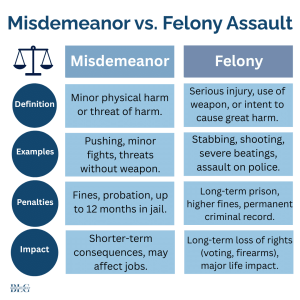
- Intentional Harm: The perpetrator knowingly or recklessly caused bodily injury to another person.
- No Serious Injury: The injuries inflicted are minor and do not lead to long-term or significant medical treatment.
- Negligent Use of a Weapon: Cases where injury is caused due to the negligent use of a weapon without the intent to harm.
Potential Penalties for Misdemeanor Assault:
- Jail time of up to 18 months.
- Fines ranging from $500 to $5,000.
- Probation or community service.
- Possible anger management or rehabilitation programs.
Although misdemeanor assault is less severe than felony assault, it is not without consequences. A conviction can still result in a criminal record, which may impact employment, housing opportunities, and personal relationships.
Understanding Felony Assault
Felony assault is considered a more serious offense, often involving significant bodily harm, the use of a deadly weapon, or actions that demonstrate extreme recklessness. In Colorado, felony assault is typically categorized as first or second-degree assault under C.R.S. § 18-3-202 and C.R.S. § 18-3-203, respectively.
Key Elements of Felony Assault:
- Serious Bodily Injury: The victim suffers injuries that create a substantial risk of death, permanent disfigurement, or long-term impairment.
- Use of a Deadly Weapon: The offender uses or threatens to use a weapon that can cause significant harm or death.
- Intent to Cause Harm: Felony assault often involves a higher level of intent to inflict severe harm or injury.
Potential Penalties for Felony Assault:
- Prison sentences ranging from 2 to 24 years, depending on the degree of assault.
- Fines up to $750,000.
- Mandatory parole periods following incarceration.
- Enhanced penalties for offenses against certain victims, such as law enforcement officers or vulnerable individuals.
The long-term consequences of a felony assault conviction are severe, including loss of certain civil rights, such as voting or firearm ownership, and difficulties in securing employment or housing.
Aggravating Factors in Assault Cases
Certain factors can elevate an assault charge from a misdemeanor to a felony or increase the severity of penalties:
- Repeat Offenses: Prior convictions can lead to harsher sentences.
- Victim Status: Assaulting specific individuals, such as police officers, healthcare workers, or elderly persons, may result in enhanced penalties.
- Hate Crimes: If the assault is motivated by bias against a protected class, it may carry additional penalties.
- Presence of a Deadly Weapon: The use of weapons almost always escalates the severity of an assault charge.
Defending Against Assault Charges
Facing assault charges can be overwhelming, but there are several defense strategies that an experienced criminal lawyer can employ:
- Self-Defense: Demonstrating that the actions were taken to protect oneself from imminent harm.
- Defense of Others: Proving that the defendant acted to protect another person from harm.
- Lack of Intent: Arguing that the harm caused was accidental and not intentional.
- False Accusations: Uncovering inconsistencies in the accuser’s statements or evidence to show the allegations are untrue.
The specifics of the case will determine the best defense strategy. Consulting a knowledgeable Fort Collins criminal attorney is essential for building a strong defense.
How Baker Law Group Can Help
If you or a loved one is facing assault charges in Denver, seeking legal representation is crucial. Baker Law Group, PLLC has extensive experience defending individuals against both misdemeanor and felony assault charges. Our team understands the complexities of Colorado law and will work diligently to protect your rights, mitigate penalties, and achieve the best possible outcome.
Contact a Fort Collins Criminal Lawyer
Navigating assault charges requires skilled legal representation. If you’re dealing with a misdemeanor or felony assault case, Baker Law Group, PLLC is here to help. Contact us today to schedule a consultation with a Fort Collins criminal lawyer and learn how we can assist you in your case.