Property rights are a cornerstone of both the legal and economic systems in the United States, providing individuals and entities with the power to own, use, and transfer land, buildings, and other assets. At Baker Law Group, PLLC, we understand that navigating the complexities of property law can be challenging. This article aims to demystify the concept by outlining the three fundamental requirements of property rights: exclusivity, transferability, and enforceability.
Understanding Property Rights
At their core, property rights entail the legal authority to possess, control, enjoy, and dispose of a particular property or asset. These rights are crucial for the development and functioning of a market economy, influencing how resources are allocated and used. Property rights apply not only to real estate but also to intellectual property, personal possessions, and other forms of assets.
Exclusivity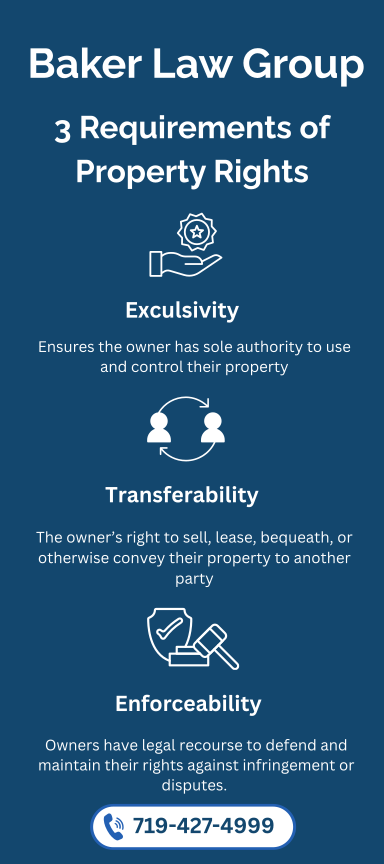
Exclusivity is the hallmark of property rights, ensuring that the rightful owner has the sole authority to use and control their property. This means that the owner can determine how the property is used, who is allowed access, and under what conditions. Exclusivity prevents unauthorized use or intrusion by others, providing a legal basis for the owner to take action against trespassers or infringers.
Transferability
Transferability refers to the owner’s right to sell, lease, bequeath, or otherwise convey their property to another party. This characteristic of property rights allows for the fluid movement of assets within the economy, contributing to market efficiency and flexibility. Transferability ensures that property can be transferred through legal processes, such as sales contracts, wills, and gifts, thereby facilitating economic transactions and investments.
Enforceability
Enforceability ensures that property rights are recognized and protected by the law. This means that owners have legal recourse to defend and maintain their rights against infringement or disputes. The government is critical in enforcing property rights through the court system, regulatory frameworks, and law enforcement agencies. Enforceability creates a stable environment where property transactions can occur securely and disputes can be resolved fairly.
The Role of Property Rights in Society
Property rights are foundational to the functioning of modern societies. They foster economic development, encourage investment, and support the efficient use of resources.
They provide a framework within which individuals and businesses can operate, offering security and predictability for property-related transactions. By clearly defining and enforcing property rights, societies can reduce conflict, promote responsible stewardship of resources, and facilitate economic growth.
Furthermore, property rights are essential for personal freedom and autonomy, allowing individuals to choose their possessions and assets. They serve as a critical mechanism for wealth generation and preservation, enabling people to invest in and benefit from their property.
Legal Support for Property Rights in Colorado Springs
Navigating property rights can be complex, involving detailed legal procedures, negotiations, and, sometimes, disputes. Whether you’re engaging in a real estate transaction, facing a property dispute, or looking to secure your property rights, having expert legal support is crucial.
 If you require legal assistance with property rights in Colorado Springs, look no further than Baker Law Group, PLLC. Our team of experienced Colorado Springs Real Estate Lawyers is here to provide you with comprehensive support and guidance.
Whether buying, selling, or dealing with a property dispute, a Colorado Springs Real Estate Attorney from our team can confidently help you navigate the legal landscape.
Don’t let the complexities of property law overwhelm you—contact a Real Estate Lawyer Colorado Springs at Baker Law Group, PLLC today and secure your property rights with expert legal assistance.