In Colorado family law cases, determining parental stability is a crucial factor in custody and visitation decisions. The definition of an unstable parent impacts how the courts protect the child’s best interests. Understanding how Colorado courts view instability is crucial for families facing challenging custody battles. By clearly recognizing what factors lead a court to designate a parent as unstable, families can better prepare for legal proceedings with informed guidance, such as from the experienced Denver child custody attorneys at Baker Law Group, PLLC.
Understanding Parental Stability in Colorado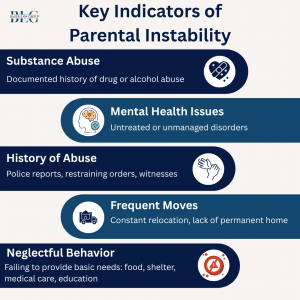
Parental stability refers to a parent’s ability to provide a safe, consistent, and nurturing environment that supports a child’s physical, emotional, and developmental needs. Conversely, instability refers to actions, behaviors, or situations that negatively impact a child’s well-being or safety. Colorado courts prioritize stability when assessing custody arrangements, making the definition of an unstable parent particularly important in custody disputes.
Factors That Indicate an Unstable Parent
In Colorado family law, an “unstable parent” generally refers to an individual whose behaviors, lifestyle, or circumstances may negatively impact their ability to care for and nurture their child. Below are some common factors that courts may consider:
1. Substance Abuse
Substance abuse is a significant red flag in custody cases. A parent with a documented history of drug or alcohol abuse may be considered unstable, especially if the behavior puts the child at risk. Courts will evaluate the extent of the substance use and whether it interferes with parenting responsibilities. Evidence such as DUI convictions, rehabilitation records, or testimony from witnesses may be presented to support claims of instability.
2. Mental Health Issues
Mental health challenges do not automatically render a parent unfit, but untreated or unmanaged conditions may raise concerns about stability. For example, severe anxiety, depression, or other mental health disorders could impact a parent’s ability to provide a safe and nurturing environment. Colorado courts may request evaluations or medical records to assess whether the parent’s mental health affects their parenting.
3. History of Domestic Violence or Abuse
A history of domestic violence or abuse—whether directed at the other parent, the child, or another household member—is a critical factor. Under Colorado Revised Statutes (C.R.S.) § 14-10-124, the court considers the presence of domestic violence when determining custody arrangements. Evidence such as police reports, restraining orders, or witness testimony may play a pivotal role.
4. Neglectful Behavior
Failing to meet a child’s basic needs, including adequate food, shelter, medical care, and education, can indicate instability. Neglect can take many forms, from leaving a child unattended for long periods to ignoring their emotional needs. Courts look for patterns of neglect rather than isolated incidents.
5. Frequent Moves or Lack of Stable Housing
A parent who frequently changes residences or struggles to maintain stable housing may face challenges in custody disputes. Stability in living arrangements is essential for a child’s sense of security and well-being. Colorado courts may weigh this factor heavily, significantly if the moves disrupt the child’s education or social development.
6. Inconsistent or Harmful Parenting Practices
A parent who fails to adhere to parenting plans, shows up late to scheduled visits, or engages in manipulative behavior against the other parent may be deemed unstable. Courts also examine whether the parent fosters a healthy relationship between the child and the other parent, as undermining the co-parenting dynamic can be detrimental.
How Instability Affects Custody Decisions
Colorado courts prioritize the child’s best interests when making custody determinations. The presence of instability significantly impacts these decisions, often resulting in limited visitation, supervised visits, or even complete loss of custody.
Courts prefer joint custody arrangements whenever possible, believing that the involvement of both parents is typically beneficial. However, instability in one parent can compel courts to award primary or even sole custody to the other, more stable parent. Stability ensures a child’s physical safety, emotional well-being, and overall developmental health.
Legal Standards for Determining Parental Stability in Colorado
Colorado courts rely on the “best interests of the child” standard outlined in C.R.S. § 14-10-124. This statute includes factors such as:
- The emotional ties between the child and each parent.
- The ability of each parent to provide for the child’s physical and emotional needs.
- The mental and physical health of all parties involved.
- The child’s adjustment to their home, school, and community.
- The ability of each parent to encourage and maintain a relationship with the other parent.
When allegations of instability arise, the court may appoint a child custody evaluator or guardian ad litem to investigate and report on the child’s welfare. These professionals provide recommendations based on their findings, which can significantly influence the court’s decision.
Proving Parental Instability in Colorado
Establishing instability in a custody case requires solid evidence and professional representation. Colorado courts require thorough documentation, credible testimonies, and sometimes expert evaluations to substantiate claims of parental instability.
Evidence may include medical and psychiatric records, school reports, law enforcement documents, witness statements, and professional evaluations. Accurate and persuasive presentation of evidence can significantly influence the court’s perception and decision-making process.
Responding to Allegations of Instability
Facing accusations of instability can be emotionally challenging. Acknowledging this reality, Baker Law Group, PLLC, offers responsive and compassionate legal representation tailored to address and counter allegations of parental instability. Strategic legal defense, combined with proactive solutions, can help demonstrate stability, responsibility, and dedication to the child’s best interests.
How Baker Law Group, PLLC Can Help
Baker Law Group, PLLC, distinguishes itself through experienced attorneys who understand Colorado family law deeply. We offer strategic counsel, responsive communication, and proven results. Our commitment to protecting parental rights and ensuring the safety of children guides our legal strategy. By clearly and effectively presenting your case, we advocate for fair custody and visitation outcomes.
Our attorneys support clients through every step of the process, from initial consultation to courtroom representation, ensuring your concerns are thoroughly addressed. We help build comprehensive, evidence-based cases explicitly tailored to your circumstances.
Contact Baker Law Group, PLLC Today
If you have concerns about parental stability affecting your family law case, you do not have to navigate the complexities alone. Contact Baker Law Group, PLLC today to schedule a consultation. Let our knowledgeable attorneys assist you in achieving the stability and custody outcomes that prioritize your child’s best interests.