Fathers not listed on their child’s birth certificate often wonder what legal rights they have regarding custody, visitation, or decision-making. Colorado, including Denver, does not automatically recognize the rights of an unlisted father. However, fathers still have options. By taking legal steps, fathers can establish paternity and pursue their rights under Colorado family law.
Understanding Paternity in Colorado
Paternity is the legal determination of fatherhood. If a father is not listed on the birth certificate, the state does not initially recognize him as the legal father. This can impact critical matters such as:
- Custody
- Parenting time (visitation)
- Decision-making for the child
- Child support obligations
For fathers in Denver, establishing paternity is the first and most important step in securing parental rights.
Why Fathers Are Not Always on the Birth Certificate
A father’s name may not appear on the birth certificate for several reasons:
- The parents were unmarried at the time of the child’s birth.
- The mother chose not to include the father’s name.
- The father was unaware of the child’s birth.
- Questions exist regarding the biological father’s identity.
Regardless of the reason, Colorado law provides a legal process for fathers to assert their parental rights.
Establishing Paternity in Colorado
Under Colorado law, there are several ways to establish paternity if a father’s name is not on the birth certificate:
1. Voluntary Acknowledgment of Paternity
If both parents agree on the father’s identity, they can sign a Voluntary Acknowledgment of Paternity (VAP) form. This form legally establishes paternity without requiring court intervention. The VAP can be signed at the hospital, local health department, or child support office.
Once filed, the father’s name can be added to the birth certificate, and he gains legal recognition as the child’s father.
2. Court-ordered paternity Testing
If the parents disagree or the mother contests the father’s claim, the father can petition the court to establish paternity. The court will typically order genetic testing to confirm biological fatherhood. In Denver, this process is handled through the Colorado Judicial Department, and results from DNA testing carry significant weight in court proceedings.
Once paternity is established, the father’s rights to custody, visitation, and decision-making come into play. He may also become responsible for child support obligations.
What Rights Do Fathers Have After Establishing Paternity?
Once paternity is legally established, fathers have the same rights as mothers under Colorado law. These rights include:
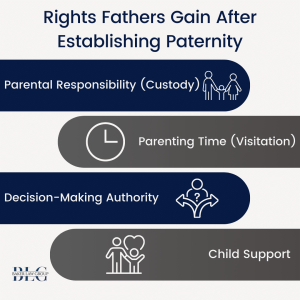 1. Parental Responsibility (Custody)
Fathers can seek shared or primary parental responsibilities. Colorado law emphasizes the child’s best interests when determining custody, considering factors such as:
- The child’s emotional and physical needs
- The parents’ ability to provide care
- The relationship between the child and each parent
Fathers not initially on the birth certificate can petition the court for custody rights once paternity is established.
2. Parenting Time (Visitation)
Fathers have the right to pursue meaningful parenting time with their children. Courts often encourage co-parenting arrangements to foster strong relationships with both parents unless one parent risks the child’s well-being.
If a father’s name is not on the birth certificate, proving paternity is essential to securing visitation rights.
3. Decision-Making Authority
Fathers can petition for joint decision-making authority, allowing them to participate in important decisions about the child’s upbringing, such as education, healthcare, and religious practices. Colorado courts prioritize decisions that align with the child’s best interests.
4. Child Support
Along with rights come responsibilities. Once paternity is established, fathers may be required to contribute to child support. Colorado uses a standard formula to calculate child support, taking into account the parents’ income and the child’s needs.
Legal Challenges Fathers May Face
Fathers who are not listed on the birth certificate may encounter challenges, including:
- Delays in court processes due to contested paternity claims
- Resistance from the child’s mother in recognizing paternity
- Establishing a relationship with the child, especially if there has been little prior contact
Fathers must work with experienced family law attorneys to navigate these challenges effectively and protect their rights.
Why Legal Representation Matters
Establishing paternity and asserting parental rights involves a complex legal process. Fathers in Denver who want recognition on the birth certificate and seek custody or visitation rights should consult an experienced family law attorney. A skilled attorney can file the necessary court petitions, advocate for fair custody and visitation arrangements, and ensure the court prioritizes the child’s best interests. Legal counsel can:
- File the necessary court petitions.
- Advocate for fair custody and visitation arrangements
- Ensure the child’s best interests are prioritized
A knowledgeable child custody attorney can help fathers overcome legal hurdles and protect their rights.
Contact a Denver Family Lawyer
If you are a father in Denver whose name is not on your child’s birth certificate, you still have legal options. Establishing paternity is the first step toward securing your rights as a parent. At Baker Law Group, our experienced family law attorneys help fathers navigate paternity disputes, custody battles, and visitation claims.
Don’t let confusion or delays impact your relationship with your child. Contact Baker Law Group today to schedule a consultation and take the first step toward asserting your parental rights.