
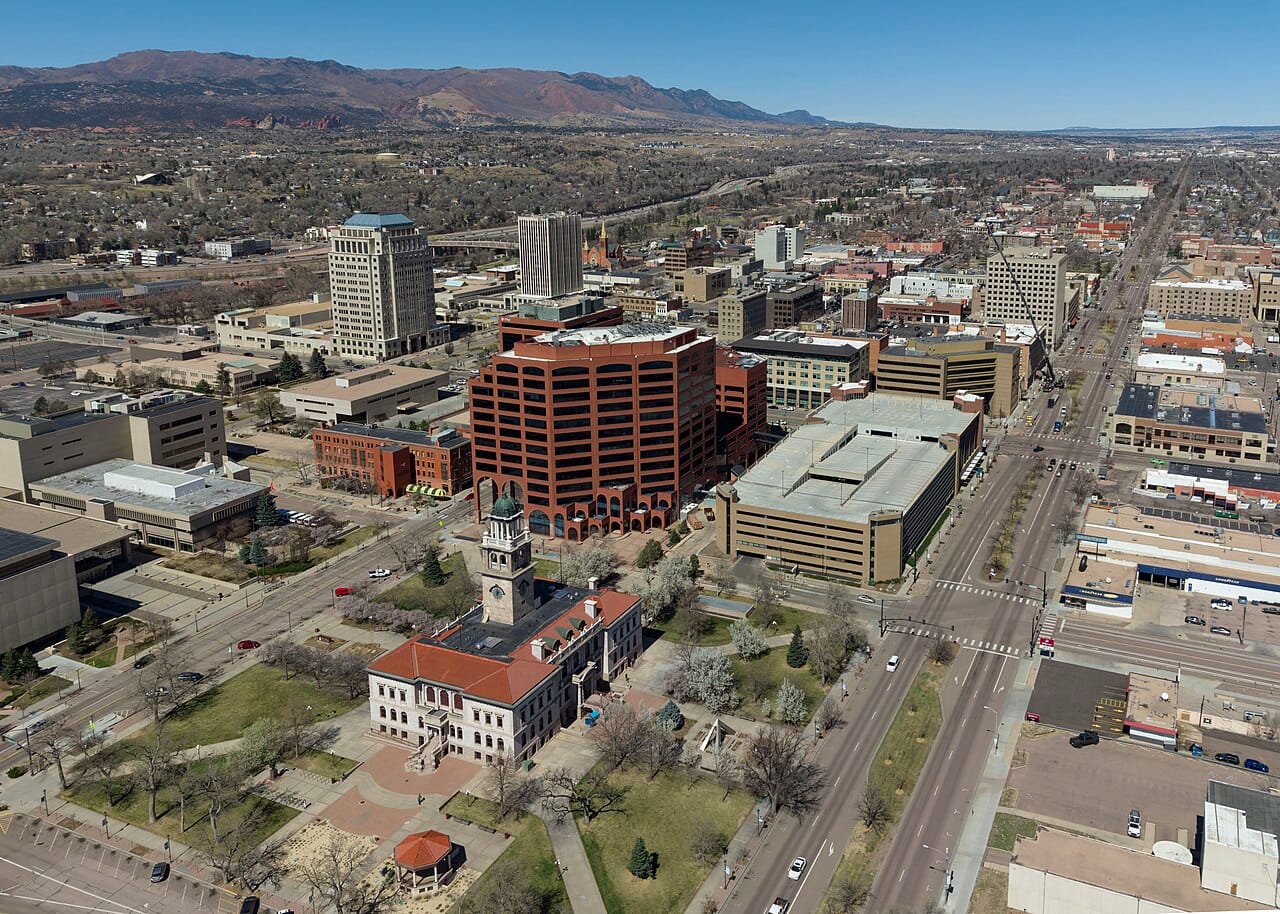
Colorado Springs Divorce Lawyer
Handling Divorce Matters in Colorado Springs, CO
Divorce is one of the most significant legal decisions you will make, and the outcome affects your finances, your children, and your future for years to come. At Baker Law Group, PLLC, our Colorado Springs divorce lawyers provide direct, strategic representation for clients at every stage of the process — from the initial filing through final decree and post-decree modifications. We handle both civilian and military divorce cases throughout El Paso County and represent clients on both sides of every issue.
Why Hire a Colorado Springs Divorce Lawyer?
Divorce in Colorado involves financial disclosures, property classification, parenting plans, support calculations, and court deadlines that carry real legal consequences if handled incorrectly. A mistake in how property is classified, how income is disclosed, or how a parenting agreement is drafted can affect you for years after the case closes.
At Baker Law Group, PLLC, our Colorado Springs divorce lawyers build a legal strategy from day one — not just when disputes arise. We understand the El Paso County court process, the local procedural requirements, and what it takes to reach an outcome that holds up long after the divorce is finalized. Whether your case is straightforward or highly contested, having experienced legal counsel from the start puts you in a stronger position at every stage.
Types of Divorce in Colorado Springs
Colorado offers several paths to dissolving a marriage. The right approach depends on the level of agreement between the parties and the complexity of the issues involved.
Uncontested Divorce
An uncontested divorce occurs when both parties agree on all significant issues, including property division, child custody, and spousal support. This type of divorce is often faster and less expensive, but the agreement still requires court approval. Having a Colorado Springs divorce lawyer review the agreement before submission protects you from terms that are difficult to undo later.
Contested Divorce
In contested divorces, the parties cannot agree on one or more issues, requiring court intervention. These cases often involve litigation, and having experienced legal representation is critical to protect your rights. Baker Law Group, PLLC prepares every contested case as if it will go to trial — because real leverage in negotiation comes from that level of readiness.
Mediated Divorce
Mediation is a collaborative approach in which a neutral third party helps the couple resolve disputes. El Paso County District Court frequently encourages mediation to streamline the divorce process and reduce conflict. Mediation can save time and money when both parties are willing to negotiate in good faith.
Collaborative Divorce
In a collaborative divorce, both parties agree to resolve issues outside of court through negotiation and cooperation, often involving lawyers and other professionals such as financial advisors. This approach is particularly well-suited to high-asset cases and situations where both parties want to keep financial details out of public court records.
Military Divorce in Colorado Springs
Colorado Springs has one of the largest military populations in the country, and military divorce cases involve a distinct set of legal considerations that standard civilian divorce proceedings do not address.
Baker Law Group, PLLC handles military divorce cases for service members and their spouses connected to Fort Carson, Peterson Space Force Base, the U.S. Air Force Academy, and Schriever Space Force Base. Key issues in military divorce cases include:
- The Servicemembers Civil Relief Act (SCRA), which provides procedural protections for active duty service members during divorce proceedings, including the ability to request a stay of proceedings during deployment
- Division of military retirement pay, which requires a specific legal document distinct from the QDRO used for civilian retirement accounts
- How BAH, BAS, and other military allowances are treated when calculating child support and spousal maintenance
- The effect of deployment on parenting time orders and how existing custody arrangements are managed when a service member is deployed
- Jurisdiction issues that arise when spouses are stationed in different states or one spouse is stationed overseas
If you are a service member or military spouse facing divorce in Colorado Springs, Baker Law Group, PLLC understands the unique intersection of military and family law that applies to your case.
How to File for Divorce in Colorado Springs
Divorce in Colorado is governed by the Colorado Revised Statutes, primarily found in Title 14. The state follows a no-fault divorce system, meaning the court does not require proof of wrongdoing to grant a divorce. The only requirement is that the marriage is irretrievably broken.
To file for divorce in Colorado Springs, at least one party must have lived in Colorado for a minimum of 91 days before filing (C.R.S. § 14-10-107). If children are involved, custody arrangements must also consider a 182-day residency requirement for the children.
The filing process generally works as follows:
- File a petition: The process begins when one spouse files a petition for dissolution of marriage with El Paso County District Court. If both spouses agree on the divorce, they may file a joint petition.
- Serve the divorce papers: If the divorce is not joint, the filing spouse must serve the other party with the divorce petition, giving them time to respond.
- Mandatory waiting period: Colorado requires a mandatory 91-day waiting period from the date of filing before a divorce can be finalized.
- Initial Status Conference: El Paso County District Court schedules an Initial Status Conference early in the proceedings to set deadlines, address temporary orders, and identify disputed issues. Both parties are typically required to attend.
- Financial disclosures: Both spouses must provide full financial disclosures detailing assets, debts, income, and expenses.
- Negotiation or mediation: If the spouses disagree on key issues such as property division, child custody, or support, mediation may be required before the court schedules a hearing.
- Final decree: Once all issues are resolved, the court issues a final divorce decree officially dissolving the marriage.
Property Division in Colorado Springs Divorce Cases
Colorado is an equitable distribution state, meaning marital property is divided fairly but not necessarily equally. Courts consider several factors when determining property division, including:
- The financial situation of each spouse
- Contributions made to the marriage, including homemaking
- The value of separate and marital property
- Any dissipation of assets by either spouse during the marriage
Marital property encompasses assets acquired during the marriage, including homes, vehicles, retirement accounts, and businesses. Separate property refers to assets owned by one spouse before marriage or acquired through inheritance or gift. The line between marital and separate property is not always clear, particularly in long marriages where finances have been closely combined.
For military families, dividing military retirement pay requires a Court Order Acceptable for Processing (COAP), which is a separate legal document from a QDRO. Handling this correctly is critical — errors in how military retirement is divided can result in significant financial losses for both parties.
Our Colorado Springs family lawyer team handles complex property division matters including business interests, investment portfolios, real estate holdings, and military retirement accounts.
Child Custody and Parenting Time in Divorce
Child custody, referred to as the allocation of parental responsibilities in Colorado, prioritizes the best interests of the child. Courts evaluate each parent's relationship with the child, each parent's ability to provide for the child's needs, and the child's adjustment to home, school, and community.
Parenting plans outline each parent's responsibilities, including parenting time and decision-making authority over education, healthcare, and other significant matters. Colorado courts encourage shared parenting arrangements, and El Paso County District Court may require parents to attend mediation before scheduling a contested custody hearing.
For military families, deployment and permanent change of station orders can significantly affect parenting time arrangements. Colorado courts can address these issues through temporary modifications during deployment and provisions for how parenting time will be managed when the service member returns.
Our Colorado Springs child custody lawyers handle parenting plans, contested custody hearings, and post-decree modifications throughout El Paso County.
Child Support in Colorado Springs Divorce Cases
Child support obligations are calculated using Colorado's child support guidelines. The formula considers both parents' incomes, the number of overnight visits each parent has, and expenses such as healthcare and childcare. For military families, BAH and BAS allowances may be factored into the income calculation, which can affect the support amount significantly.
Our Colorado Springs child support lawyers help ensure child support orders are accurate and advocate for appropriate adjustments when circumstances change.
Spousal Maintenance in Colorado Springs Divorce Cases
Spousal maintenance is not automatically granted in Colorado. Courts consider factors such as the length of the marriage, each party's financial resources, and their standard of living during the marriage. Maintenance can be temporary, rehabilitative, or long-term depending on the circumstances.
Types of spousal maintenance in Colorado:
- Temporary maintenance: Awarded during the divorce process to help a lower-earning spouse maintain financial stability while the case is pending.
- Rehabilitative maintenance: Designed to help the recipient become financially independent, often used when one spouse needs education or job training.
- Long-term maintenance: Awarded in cases where a spouse cannot become self-sufficient due to age, disability, or other factors. This type of award is not common and typically applies in long marriages.
Colorado uses a formula to calculate spousal support for couples earning under $240,000 per year combined, but judges have discretion in determining the final amounts. Factors include the length of the marriage, the income and financial resources of both spouses, the standard of living established during the marriage, and the contributions of each spouse to the household. In military divorce cases, military pay, allowances, and retirement benefits are factored into the income analysis.
Domestic Violence and Divorce in Colorado Springs
If domestic violence is present, it can significantly affect divorce proceedings, particularly in matters of child custody. Colorado courts prioritize the safety of children and the victimized spouse. Protective orders may be issued to ensure safety during and after the divorce process.
Baker Law Group, PLLC represents both individuals seeking protective orders and those who have been wrongly accused and need to contest an order. We understand that domestic violence allegations in a divorce context require careful, thorough legal handling on both sides.
Post-Divorce Modifications in Colorado Springs
Life circumstances change after a divorce is finalized, and Colorado law allows post-decree modifications in specific situations.
- Child support modifications: A parent can request a modification when there is a substantial and continuing change in financial circumstances, such as a significant increase or decrease in income, job loss, or a change in the child's medical or educational needs.
- Parenting time and decision-making modifications: Modifications to parental responsibilities may be requested when one parent relocates, there is evidence of abuse or neglect, or the child's needs have changed significantly. Colorado law places timing restrictions on how frequently certain modification requests can be filed, particularly when the proposed change would significantly shift where the child primarily lives.
- Spousal maintenance modifications: Alimony modifications may be granted when the recipient remarries, when another material change makes the current order unfair, or when the paying spouse experiences a major financial change. If the original divorce agreement states that maintenance is non-modifiable, the court's ability to change the order is limited.
For military families, a deployment, PCS move, or change in military pay may support a modification request, though the court still applies the standard modification analysis based on the facts presented.
To modify a court order, you must file a motion and provide evidence supporting the requested change. Baker Law Group, PLLC handles post-decree modification and enforcement proceedings throughout Colorado Springs.
Why Colorado Springs Families Choose Baker Law Group, PLLC
Clients across Colorado Springs choose Baker Law Group, PLLC for divorce representation because we build a case strategy from the first consultation — not just when disputes escalate. We handle both civilian and military divorce cases, represent clients on both sides of every issue, and prepare every case as if it will go to trial because that preparation is what creates real leverage in negotiation.
What you get when you work with our team:
- Direct communication with the attorney handling your case
- Familiarity with El Paso County District Court procedures, local filing requirements, and the Initial Status Conference process
- Experience with both civilian and military divorce cases throughout Colorado Springs
- Representation in contested hearings, mediation, and collaborative divorce proceedings
- Post-decree support for modifications and enforcement
Our Colorado Springs Office
Baker Law Group, PLLC serves Colorado Springs clients from our office at 7035 Campus Dr., Suite 702, Colorado Springs, CO 80920. The office is located in the north Colorado Springs area, convenient for clients throughout the region. The campus is easily accessible from I-25 via the Briargate Parkway or Research Parkway exits, and parking is available on site.
FAQs about Divorce in Colorado Springs
Frequently Asked Questions About s about Divorce in Colorado Spring
How long does a divorce take in Colorado Springs, Colorado?
Colorado imposes a mandatory 91-day waiting period before a divorce can be finalized, beginning once the other spouse is properly served or a joint petition is filed. Uncontested divorces can often be completed around the 91-day mark if the paperwork is timely and disclosures are complete. Contested divorces involving property disputes, parenting time disagreements, or support issues take considerably longer, sometimes a year or more depending on the complexity of the case and El Paso County court scheduling.
Does it matter who files for divorce first in Colorado?
Filing first carries no automatic legal advantage in Colorado. The spouse who files becomes the petitioner and the other becomes the respondent, but neither position gives either party an upper hand in how the court decides property, support, or parental responsibilities. What matters far more is the quality of your legal preparation. That said, filing first gives you procedural control over starting the case and more time to prepare your financial disclosures and legal strategy before the other side responds.
How is property divided in a Colorado Springs divorce?
Colorado divides marital property equitably, which means fairly but not necessarily equally. The court considers each spouse's financial situation, contributions to the marriage, the length of the marriage, and the economic circumstances each person will face after the split. Separate property — assets owned before the marriage or received as a gift or inheritance — generally stays with the original owner. The line between marital and separate property is not always clear, particularly in long marriages where finances have been closely combined.
What happens if my spouse hides assets during our Colorado Springs divorce?
Colorado law requires both spouses to submit complete and accurate financial disclosures during divorce proceedings. If a spouse is hiding income, transferring assets, undervaluing a business, or overstating debts, discovery requests, subpoenas, and forensic accountants can be used to trace financial activity and identify concealed assets. Courts can impose sanctions on a spouse who fails to disclose fully. In some cases, undisclosed assets may support post-decree relief, but the remedy depends on the facts and procedural rules.
How does military service affect divorce in Colorado Springs?
Military divorces in Colorado Springs raise additional federal and practical considerations, such as the Servicemembers Civil Relief Act, military retirement division, and deployment-related scheduling issues, on top of Colorado family law rules. Active duty service members may be entitled to a stay of divorce proceedings under the SCRA if military duties prevent participation in the case. Military retirement pay requires a specific division order distinct from the QDRO used for civilian retirement accounts. BAH, BAS, and other military allowances may be factored into income calculations for child support and spousal maintenance. Deployment can also affect parenting time arrangements, and Colorado courts may address these issues through temporary modifications depending on the circumstance